
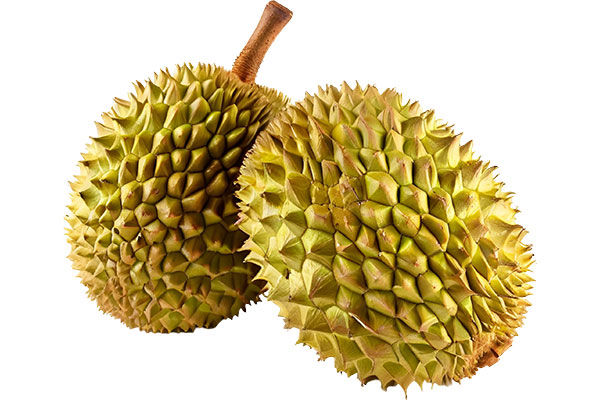
Yi Dian Hong (A Little Red / A Drop of Red)
Rich, creamy with a distinct bitter-sweet flavor Smooth, creamy High PopularityYi Dian Hong translates to A Little Red / A Drop of Red, named for the characteristic reddish speck or tone often found near the bottom of the husk. This prized Penang clone yields pale yellow flesh that is famously smooth, creamy, and complex, delivering a strong punch of bitter-sweetness.
Price Range
RM40 - RM65 per kg
Season
June - July
Taste
Rich, creamy with a distinct bitter-sweet flavor
Aroma
Pungent
Where to Find
Balik Pulau, Penang
Flavor Profile
Characteristics
Personal Comment for Yi Dian Hong (A Little Red / A Drop of Red)
Community Ratings
Avg. Metrics
Write a Review
Community Reviews (2)
Not bad leh, quite nice
Hurmm, okay la
Inspect the Durian and Confirm Prices
Always begin by examining the displayed durians. If many appear subpar, be more caution and it's wise to look elsewhere.
Durian prices are highly variable, much like currency exchange rates. What you paid previously, even recently, might not apply today or tomorrow. Therefore, always confirm the price, even if a tag is visible, to avoid surprises after packing (e.g., being told the displayed price was for a different durian).
And given the highly personal nature of taste – everyone experiences flavors like sweetness and bitterness uniquely – it's best to trust your own palate by requesting a tasting from the seller.
Search Other Durian Varieties
Similar Varieties You Might Enjoy:
Gold Fish (Kim Hu / Ikan Mas)
Gold Fish, locally known as Kim Hu or Ikan Mas, is a popular mid-to-late season Penang durian. Known for their relatively large size which can exceed 3kg, these durians feature striking bright yellow flesh that is satisfyingly thick and soft, offering a sweet taste paired with a pleasant mild bitterness.
Learn More
D600
D600 is an early season durian heavily associated with Penang. It is actually a seedling grown from the famous Khun Poh Ang Bak cultivar. It boasts an intense rich yellow flesh that is incredibly sweet and creamy with a characteristic hint of sourness, making it a fantastic starter durian for the season.
Learn More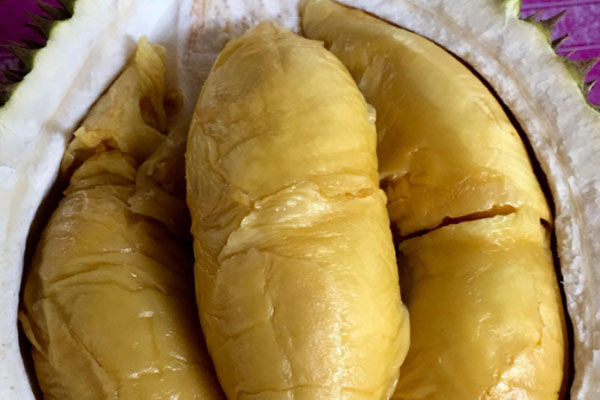
D103 Mong Zong Qing Ren (Bangkok Tree 28)
Durian D103, often referred to as 101 durian, is a popular, affordable, and flavorful durian cultivar. It's widely available in local markets in Malaysia and is considered a good everyday durian, often a budget-friendly alternative to Specialty Produce's Mao Shan Wang. Affordable yet flavorful durian.
Learn More
Yi Dian Hong (一点红) — literally "One Drop of Red" — is one of Penang's most intriguing and storied durian clones. The name tells its own story: somewhere on the thick, greenish husk of this fruit, usually near the base or tip, you'll notice a tiny but unmistakable reddish-brown spot or patch. That singular marking is its signature identity card. In the crowded stalls of Balik Pulau during peak season, a seasoned buyer will flip a durian over and look for that telltale red dot before anything else.
Yi Dian Hong is an officially recognized Penang heritage clone, listed alongside Gold Fish (Kim Hu) and Lin Feng Jiao as part of Penang's prized Balik Pulau durian heritage — a group of indigenous cultivars that the state has championed as genuinely Penang in character and provenance.
How to Identify It
Yi Dian Hong is a relatively small-to-medium sized fruit, which can be a surprise given its outsized reputation. It tends to be somewhat oval in shape with a slightly flattened base. The husk is the standard Penang green-grey, sometimes tinged with brownish patches as it nears peak ripeness.
Inside: Flesh and Texture
Don't let the name fool you — there's no red flesh inside a Yi Dian Hong. Pop a section open and you'll find pale yellow to cream-coloured arils that look deceptively mild. The flesh is plump and generously filled relative to the fruit's modest size. Each pod is thick with a silky, almost porcelain-smooth surface.
The texture is the first thing that gets you: it's exceptionally smooth and creamy, closer in consistency to a thick custard than a fibrous fruit. It dissolves on the tongue in a way that feels almost deliberate, as if designed to maximise contact with your taste buds before the real flavor sets in.
Flavor Deep Dive: Complex, Pungent, Memorably Bitter-Sweet
Yi Dian Hong is not for the faint-hearted. This is a durian for people who want to be challenged. The aroma alone is assertive — deeply pungent, carrying that characteristic fermented-alcoholic edge that marks a truly serious Penang clone. Even from a distance, a ripe Yi Dian Hong announces itself.
The taste is a layered, complex adventure. It opens with a wave of rich, bitter-sweet complexity — heavier on the bitter end of the spectrum than sweeter varieties like Red Prawn or Gold Fish. But underneath the bitterness is a backbone of genuine sweetness and a lingering creaminess. The aftertaste is long, aromatic and almost wine-like in its persistence. For experienced durian eaters, that bittersweet finish is not a flaw — it's the whole point.
If Musang King is the gateway drug of durian appreciation, Yi Dian Hong is what you graduate to once you've developed your palate and started craving something more complex and less predictable.
Context: A Penang Heritage Clone
Yi Dian Hong is one of a handful of officially recognized Penang heritage clones — varieties that are considered uniquely Penang in origin and character. These heirloom cultivars are generally found only in the Balik Pulau growing region, in orchards passed down through family lines. They are rarely found outside Penang and almost never commercially mass-produced, which is part of what makes them so sought after.
Unlike the nationally-registered D-series clones (D24, D101, etc.), Yi Dian Hong is a regional variety prized by those who know. Prices are accordingly higher when available, and supply is limited each season.
How to Find It
Your best chance of encountering Yi Dian Hong is to visit the orchards and stalls in the Balik Pulau area during peak season (June to July). Use the name in Chinese if you can — saying "Yi Dian Hong" or showing the characters 一点红 to a stall owner will mark you immediately as someone serious. Supply is highly seasonal and tree-dependent — when you find it, buy enough, because you may not get another chance that year.